
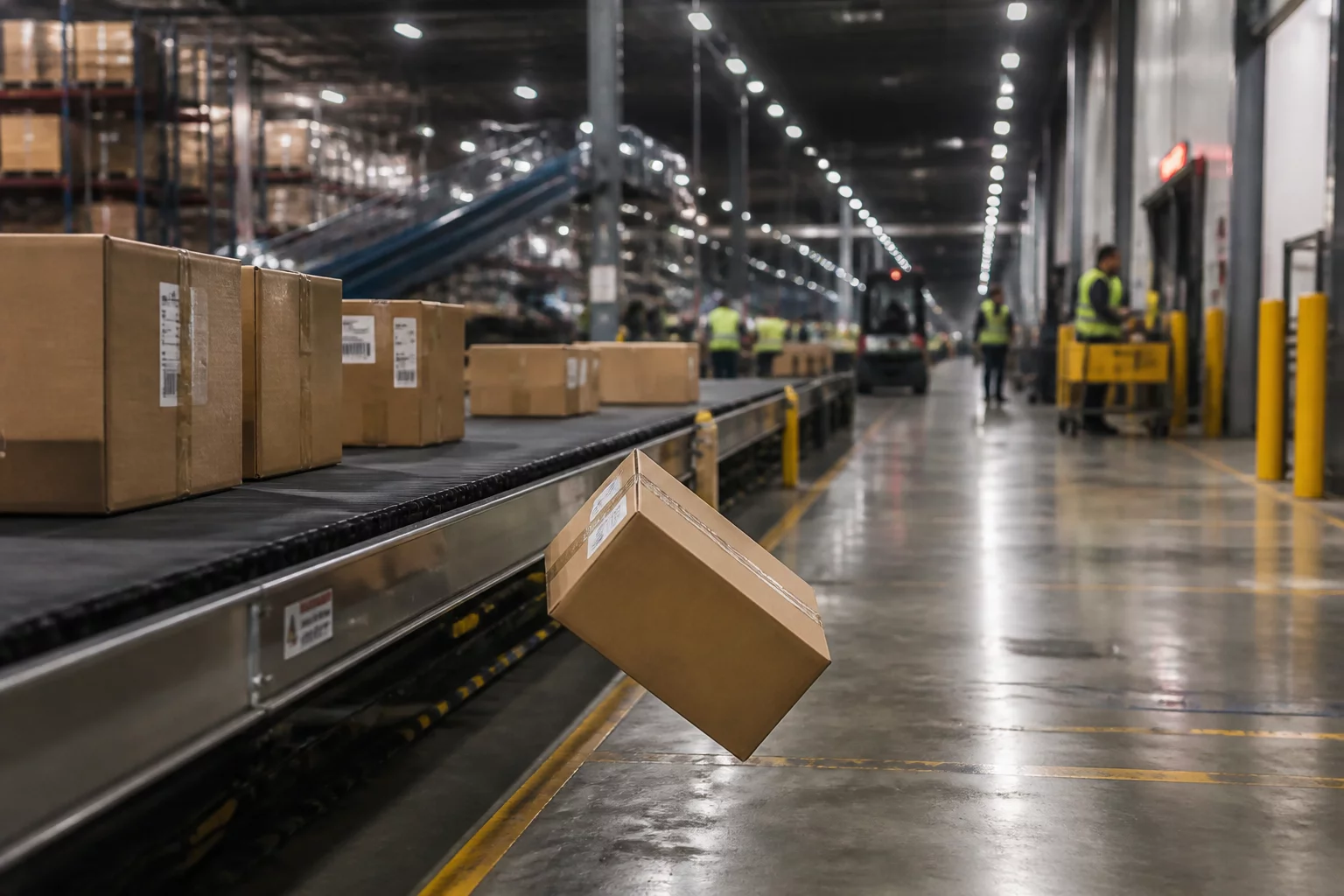
The Anatomy of Secondary Sorting Bottlenecks
Regional transit hubs rely on high-speed automated optical sorters to index incoming freight containers and route parcels into specific outbound staging bays. When barcoding standards degrade or optical scanner arrays experience miscalibration, parcels enter recirculating loops within the local hub infrastructure. Rather than flagging as an unreadable barcode immediately, the dispatch system frequently retains the shipment in a transient queue, showing repetitive scan updates without physical departure.
This breakdown compounds exponentially when enterprise pallet loads split across mixed sort lines. While the parent master tracking manifest registers receipt at the facility gate, sub-tier parcels diverge into separate physical chutes, resulting in partial shipments arriving at loading docks while remainder inventory remains stranded in secondary staging racks.
Cross-Dock Misdirection Anomaly
Diverter timing offsets at municipal sorting nodes can cause parcels assigned for morning delivery trucks to recycle back to bulk outbound trailers, triggering 48-hour delivery delay cycles.
Failure Trajectory: From Induction to Misdirected Staging
The sequence of operational lapses typically unfolds across four distinct stages inside municipal distribution hubs:
- Inbound Induction Mismatch: Container scans register at dock intake, but secondary optical read arrays misinterpret multi-barcode labels on consolidated packaging.
- Chute Diverter Misalignment: Mechanical diverters misfire due to belt speed discrepancies, dropping packages into wrong zip-code transport bins.
- Loop Recirculation Without Operator Override: Automated re-induction conveyors loop unverified parcels continuously without raising an exception trigger on supervisor terminals.
- Phantom Departure Flagging: Batch dispatch systems auto-generate electronic departure manifests even though the physical container remains isolated in staging.
Corrective Audit Protocols & Reconciliation Actions
To prevent multi-day inventory black holes within localized carrier distribution centers, enterprise supply teams implement the following verification benchmarks:
- Enforce single-barcode compliance on multi-item cartons to eliminate dual-scan optical collision errors at automated intake ramps.
- Mandate physical bin reconciliation for any commercial tracking identity lingering in secondary hub queues longer than twelve operating hours.
- Integrate direct carrier station manager telemetry escalations when automated tracking cycles repeat scan timestamps without geographic movement.
Field Commentary & Log Debriefs
No debrief logs posted yet. This could be your first comment.
Submit Operational Log Note