
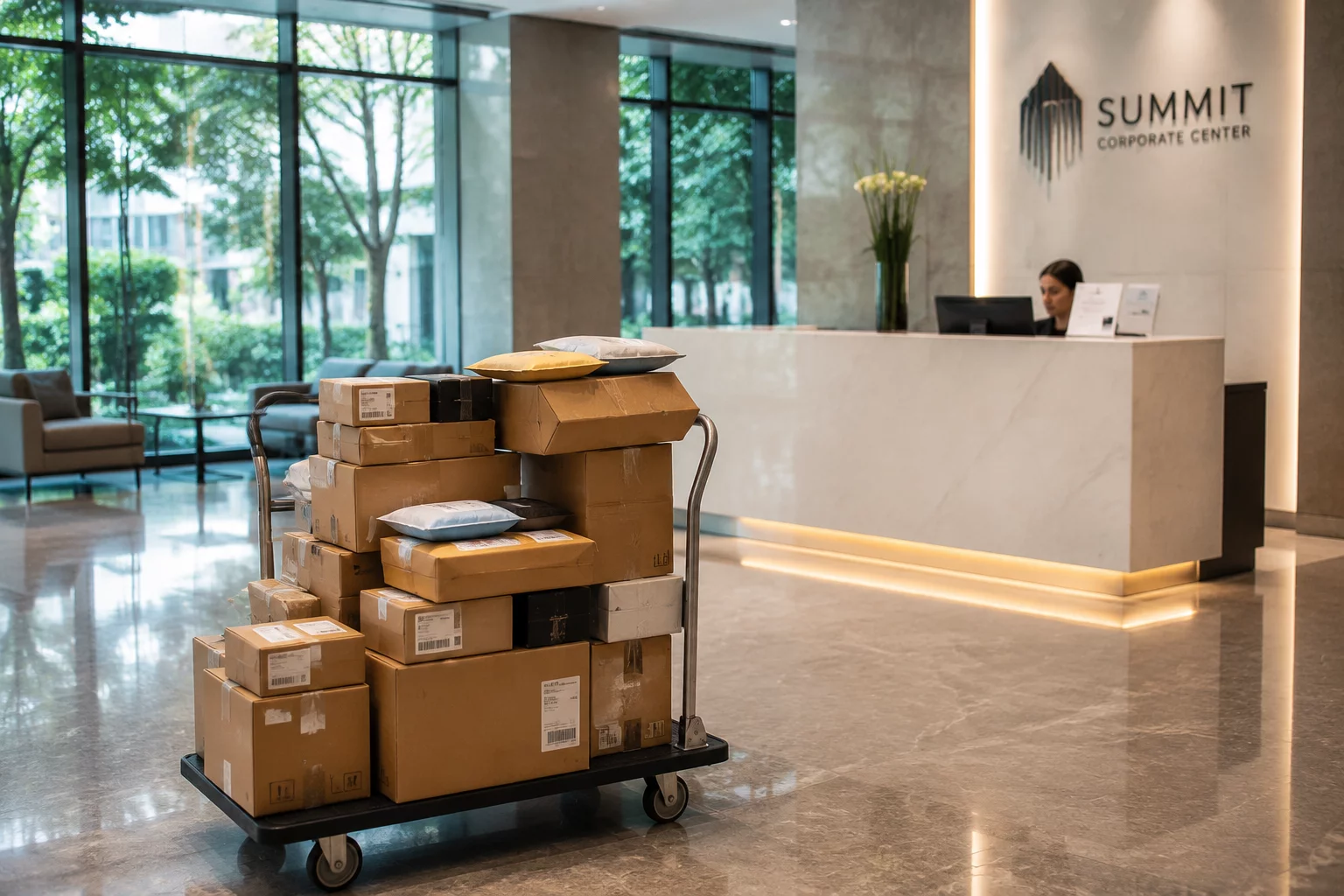
Delivery Exception Analysis & Handoff Anatomy
In commercial office complexes and shared corporate buildings, the journey of a package does not end when the carrier scans the barcode as completed. The courier deposits the carton at the central reception desk or the basement loading bay, signs off on the route log, and leaves the premises. At that exact point, an administrative vacuum opens up: the delivery carrier considers the service fulfilled, while the designated recipient on the twelfth floor has received nothing.
When examining delivery exception examples, mail delivery teams frequently encounter structural disconnects between carrier manifest entries and recipient physical availability. An uncoordinated returned-mail process causes substantial overhead, requiring detailed internal protocols to prevent continuous dispatch loops during high-volume business delivery handoffs.
- > Ambiguous recipient routing directives on outer packaging omitting floor and suite numbers.
- > Shared multi-tenant front-desk staff accepting packages without an internal intake signature log.
- > Lack of documented escalation points when loading docks reject entry for off-hour freight dispatches.
- > Unsynchronized return addresses omitting internal desk reference numbers during handback phases.
Follow-up Decisions & Remediation Architecture
Effective resolution mandates immediate logging into the central registry before initiating any secondary reshipment. Without correcting the root identifier, repeat dispatches reliably produce identical failures, increasing carrier handling costs and operational downtime across internal logistics pipelines.
Companies operating in multi-story towers must configure explicit dual-line address templates on all shipping profiles. Establishing a dedicated intake notification protocol between front-desk staff and internal mail custodians prevents inventory from idling in lobby sorting bins for days.
- 01 Flag incoming carrier exception notification in internal tracker immediately.
- 02 Contact building reception or regional mail hub supervisor with parcel tracking data.
- 03 Verify floor, suite, and recipient identity against corporate roster and internal directory.
- 04 Authorize dedicated intra-building courier handoff to complete the physical transfer.
Field Commentary & Operational Reviews
This happens so often in large corporate offices. The delivery exception occurs precisely at the handoff between external courier and the private facility floor teams.
> sys_status: OK | throughput: 14.8k ops/sec | packet_loss: 0.00%